A clipper that suits a barber doing twenty fades a day is different from one that suits a barber doing mostly scissor work with clipper finishing. Work through these four steps.
Step 1: Start with the cuts you do most
- Mostly fades and tapers: choose a dedicated fade clipper with a blade that closes tight for blending
- Mostly bulk removal and buzz cuts: prioritise power and a wide, sharp blade
- A mix of everything: an all-round cordless clipper, plus a trimmer for detail work
Step 2: Check the five things that matter
- Motor. The motor decides how the clipper handles thick or coarse hair. A weak motor drags, slows down and pulls.
- Blade. Look for sharp, durable blades that are detachable, so you can swap or replace them instead of the whole clipper.
- Cordless or corded. Cordless is the norm in most shops now. Make sure the battery lasts through your busiest stretch, and check how long it takes to recharge.
- Weight and grip. You'll hold this tool for hours. A clipper that feels slightly heavy in the store will feel much heavier by the end of a Saturday.
- After-sales support. Check where replacement blades come from, how much they cost, and whether the warranty is honoured locally.
Step 3: Set a realistic budget
In South Africa, professional clippers mostly fall between R1,000 and R2,500. Under R1,000 you're usually looking at home grooming clippers. Above R2,500 you're paying for premium flagships and imported brands.
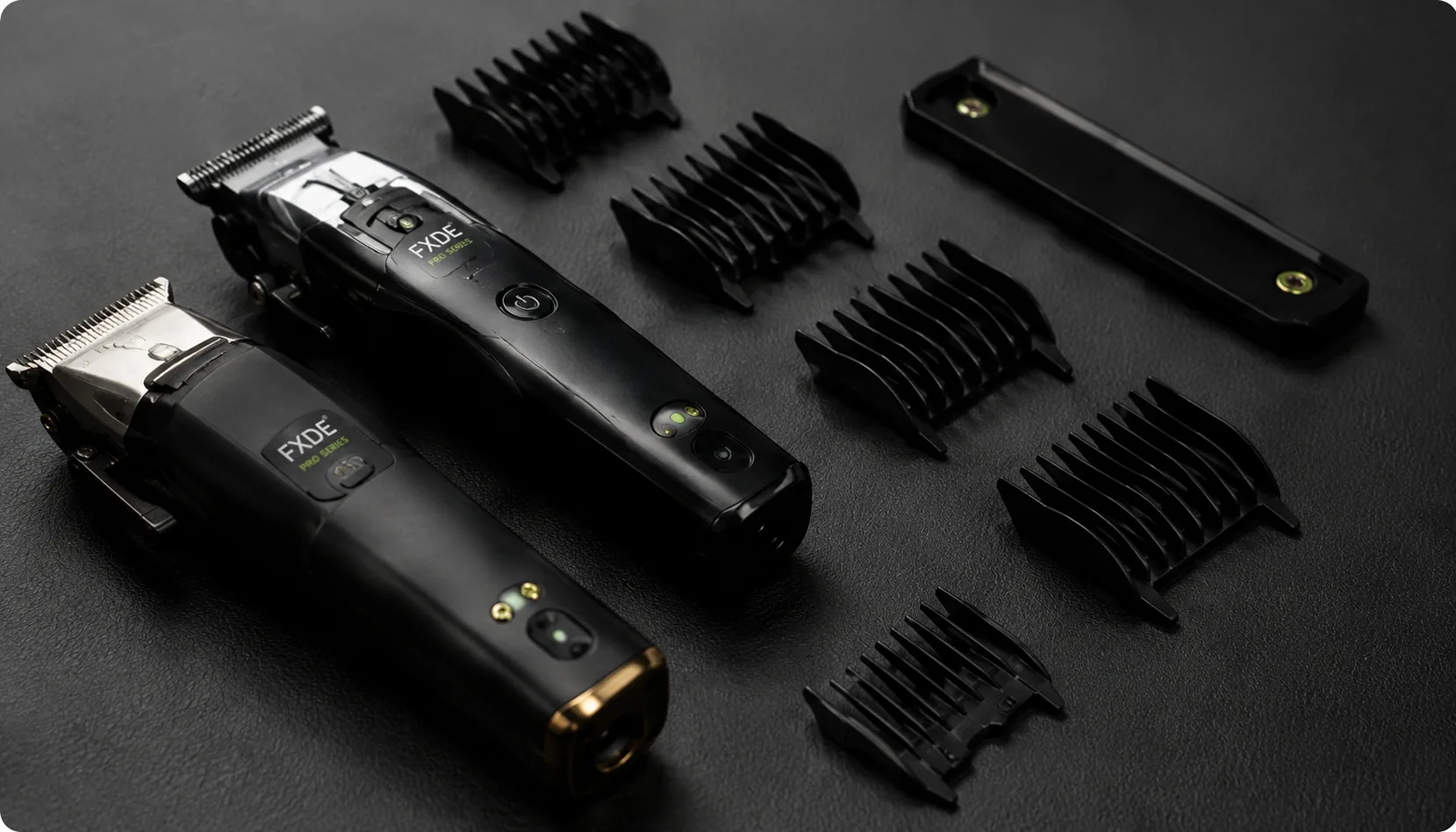
- R1,000 to R1,500: a reliable professional clipper for starting out or as a backup, such as the FXDE Barber Edition Clipper, R1,199.99
- R1,500 to R2,200: a cordless fade clipper built for daily shop use, such as the FXDE Master Fade Clipper Pro Series, R1,999.99
- R2,200 and up: the flagship of a range, such as the FXDE Ultimate Legend Fade Clipper, R2,499.99
Step 4: Avoid the common mistakes
- Buying on brand name alone. Even big brands make entry models that aren't built for shop use.
- Ignoring the cost of blades. Over a few years, you'll spend more on blades than you expect.
- Buying from unofficial sellers. Counterfeit clippers are common online and carry no warranty.