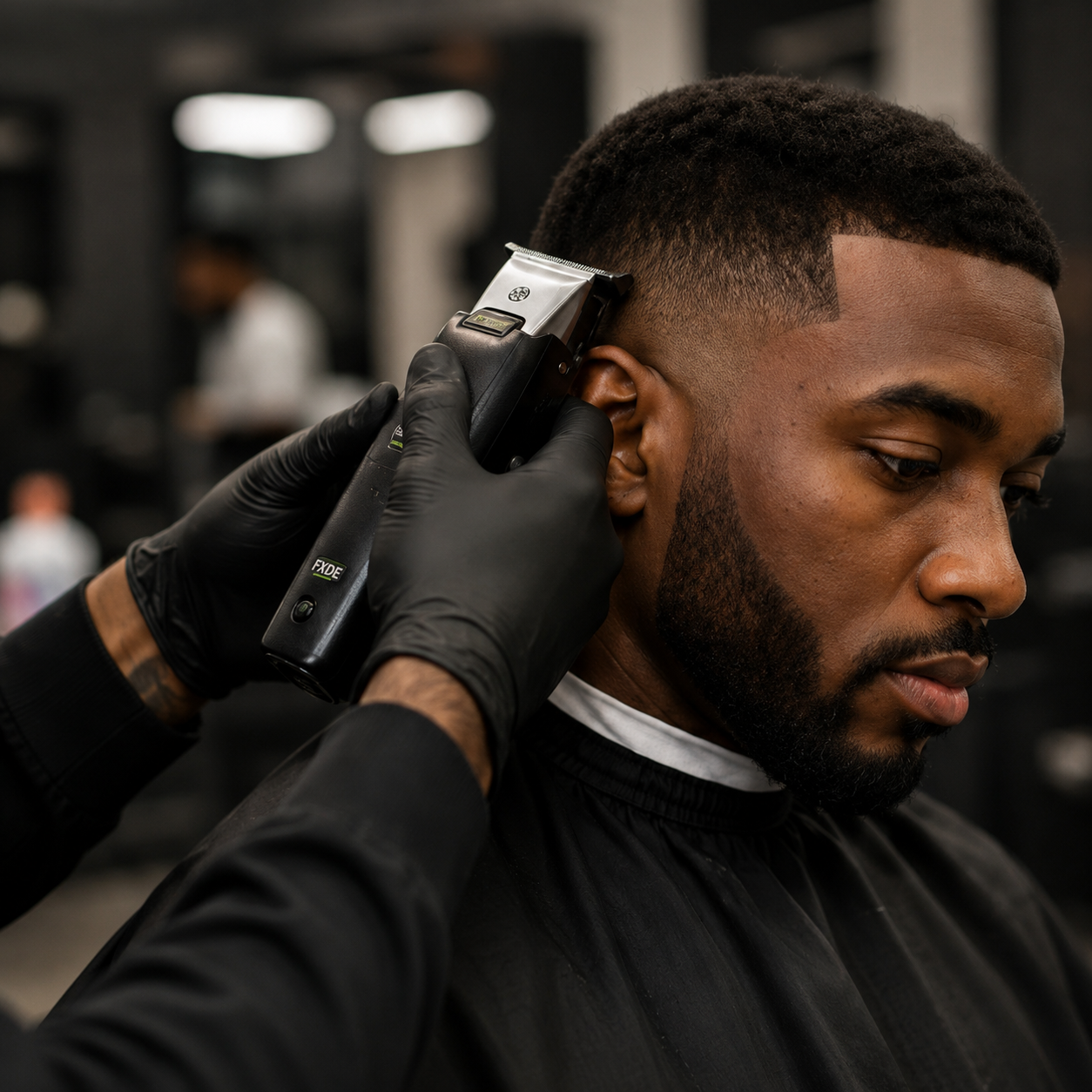

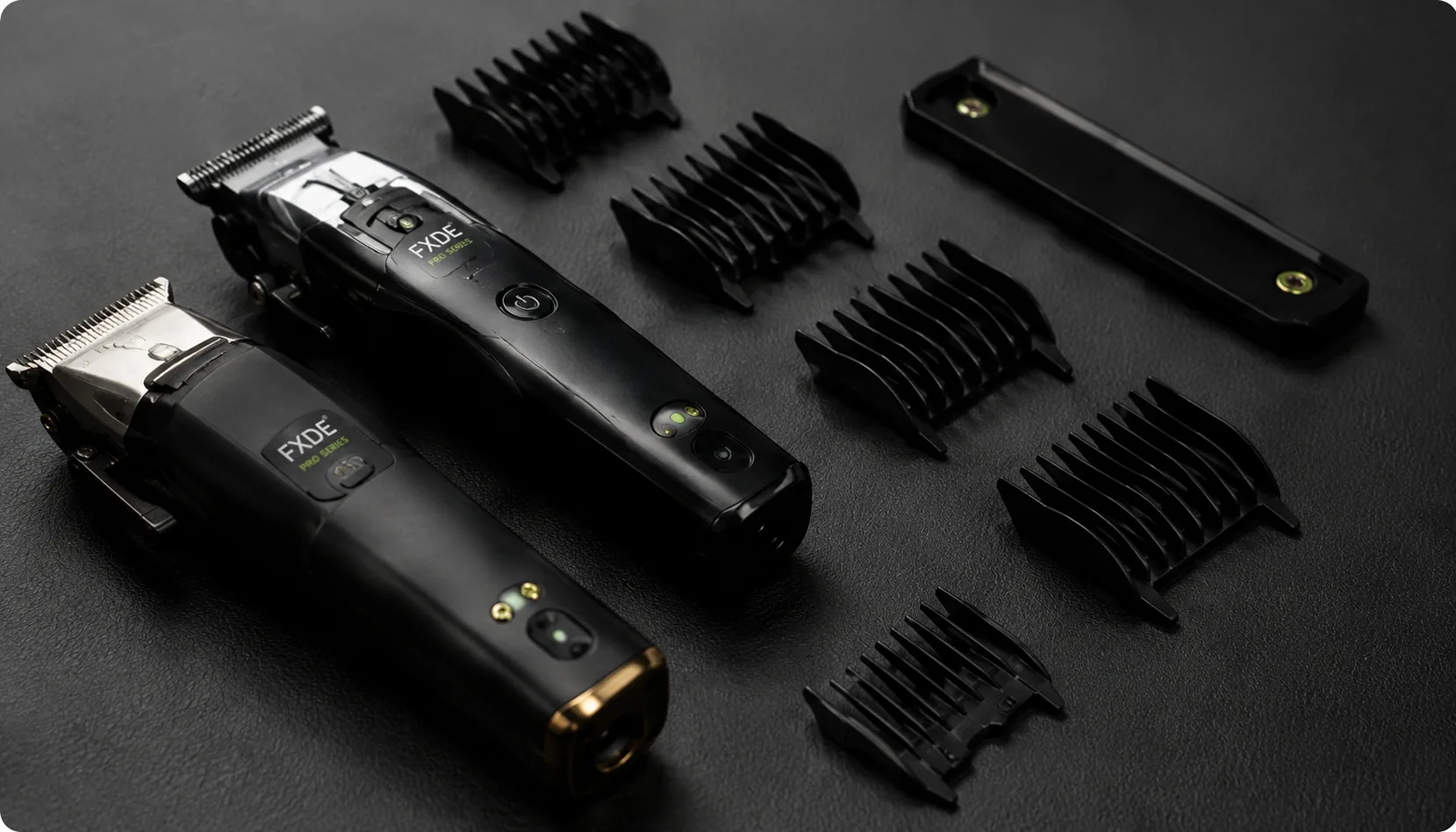
Clipper blade types fall into a handful of core families: taper, fade, detachable, T-blade, skip tooth/finishing and surgical/wide. Each one is built for a specific job, from close fades to bulk removal to clean outlining. Material and maintenance matter just as much as the blade itself, because the sharpest geometry still pulls hair and irritates skin if it is dull, dry or the wrong size for the task.
Fxdefxde.co.zaKeep Every Cut Running SmoothlyShop professionally tested clipper blades and barber tools built for precision, reliability, and long hours behind the chair.Shop FXDE barber toolsTL;DR:
- Using a fade blade down to zero gap requires sharp blades and consistent technique to avoid visible stripes.
- Detachable blade systems allow quick size changes, with sizes matching guard lengths, streamlining shop workflow.
- Regular oiling, brushing, and cleaning are more effective for blade longevity than relying solely on high-end materials or coatings.
- Blade numbers run in reverse, so higher numbers like #40 or #50 cut closer than lower numbers such as #1 or #4.
- The taper lever adjusts between guard sizes by about 1/16 inch, helping create smooth fades and blended transitions.
Table of Contents
- The main clipper blade types and when to use each one
- Clipper blade materials and coatings: what actually changes
- Blade numbers and cutting lengths: what #1 to #40 actually means
- Using the taper lever for smoother fades and blends
- Maintenance that keeps blades cutting cleanly
- How FXDE’s testing shapes these maintenance recommendations
- What matters more than blade choice
- Where FXDE fits once you know your blade
- FAQ
- Sources
The main clipper blade types and when to use each one
Picking the right blade geometry saves you from the two most common mistakes on the floor: pulling hair because the teeth are wrong for the density, and uneven fades because the blade cannot cut close enough. Each type below solves a different part of that problem.
Taper blades are the all-purpose workhorse fitted to most standard clippers. They have a moving lever built into the blade assembly that shifts the cutting gap, which makes them useful for everyday cuts where you need to move between lengths without changing guards constantly. The common failing here is relying on the lever alone for a full fade. It smooths transitions, but it will not replace a proper blade swap when you need a genuine skin fade.
Fade blades are ground to cut much closer to the skin, often down to zero gap, which is what gives a fade its clean, graduated look. The risk with fade blades is razor-line marks: if your technique is inconsistent or the blade is dull, you get visible stripes instead of a smooth gradient. Keeping the blade sharp and moving with light, even pressure avoids this.
Detachable, or snap-on, blades click onto a universal clipper body without screws, which means you can swap sizes in seconds mid-cut. This is the standard setup in busy shops because it cuts down on having multiple clippers for different lengths. They are also the usual choice for body and heavy-duty clipping, where a wider range of sizes gets used across a single session.
T-blades and wide T-blades are narrower at the tip, built for outlining, beard edges and detail work where precision matters more than speed. A wide T-blade gives a bit more surface area for straight-line work along hairlines, while a standard T-blade suits tighter detailing around ears and necklines.
Skip tooth and finishing blades, along with surgical or wide blades, round out the set:
- Finishing or full-cut blades leave a smooth, even line and suit straightforward all-over cuts.
- Skip-tooth blades have gaps between the teeth that reduce drag and pulling on dense or curly hair, making them a better choice for texturising than for a perfectly smooth finish.
- Wide and T-blades are suited to outlining and close edge work. See general blade usage guidance.
- Surgical blades cut extremely short, used for close shaves and detailed prep work rather than everyday cutting.
Matching blade to task is the first decision. Everything else, including material and length setting, builds on getting this choice right.
Clipper blade materials and coatings: what actually changes
Blade material affects three things that matter daily: how hot the blade runs, how long the edge stays sharp, and how it feels against skin. Stainless steel is the standard, offering a reasonable balance of durability and cost, and it holds an edge well enough for regular professional use without needing constant attention.
Ceramic blades run cooler during long sessions, which makes them a sensible option when you are working on clients with sensitive skin or doing back-to-back cuts where heat build-up becomes noticeable. They are also more brittle than steel, so dropping one is more likely to chip the edge than simply dull it.
Titanium and similar coatings reduce friction against the hair and skin, which can extend how long a blade feels smooth in use. Coated blades tend to suit high-volume shops where blades get heavy daily use and replacing them often would get expensive.
- Stainless steel: dependable edge retention, moderate heat, straightforward to maintain.
- Ceramic: runs cooler, gentler on sensitive skin, more prone to chipping if mishandled.
- Coated (titanium or similar): lower friction, often longer usable life before replacement becomes necessary.
Sharpening limitations differ too. Ceramic blades generally cannot be sharpened with the same stones or tools used on steel, which usually means replacement rather than resharpening once the edge goes.
Blade numbers and cutting lengths: what #1 to #40 actually means
Blade numbers tell you the cutting length, but the scale runs in reverse to what people often expect: the higher the number, the shorter the cut. A #1 leaves hair noticeably longer than a #10, and a #10 leaves far more length than a #40.
As a rough guide, a #10 blade cuts to around 1.6 millimetres, while a #40 cuts down to about 0.25 millimetres, which is why #40 is typically reserved for surgical-style prep and skin-level work rather than general cutting. A #50 sits even closer, used mainly where an almost bare-skin finish is required.
Detachable blade systems map their size numbers to the same lengths as fixed guard combs, so a detachable size 1 blade and a guard-comb size 1 should leave comparable length. This equivalence is what lets barbers move between detachable and fixed-blade clippers without relearning the numbering.
- Lower numbers (#1 to #4): common for all-over cuts and body clipping where more length stays on.
- Mid-range numbers (#5 to #10): frequently used as the base length before fading.
- High numbers (#30 to #50): reserved for close fades, outlining prep and surgical-style finishes.
Using the taper lever for smoother fades and blends
The taper lever sits on most standard clippers and adjusts the blade gap without swapping attachments. Moving it typically changes the cutting length by around 1/16 inch, according to Wahl’s technique guidance, which is small enough to smooth a transition between two guard sizes rather than jump straight from one to the next.
Push the lever up (open) for a slightly longer cut, and down (closed) for a tighter one. Using it between guard changes, rather than only at the extremes, is what produces a blended fade instead of a visible step.
Pro Tip: Apply oil to the blade while running the clipper and move the lever back and forth a few times. This works the oil evenly across the blade and keeps lever movement smooth instead of sticky.
Maintenance that keeps blades cutting cleanly
Blade maintenance is less about one big clean and more about small habits repeated daily. A blade that gets oiled and brushed every shift lasts considerably longer than one that only gets attention when it starts pulling.
- Brush off hair and debris after every single use, before oil goes on.
- Apply clipper oil to the back and sides of the blade while the clipper is running, then move the taper lever to spread it fully, a sequence recommended in Wahl’s maintenance guidance.
- Wipe excess oil off with a clean cloth so it does not attract more hair and lint.
- Once a week, remove the blade entirely and clean it with an appropriate blade wash or disinfectant.
- Inspect the edge for nicks, rust spots or uneven wear while the blade is off the clipper.
- Dry blades fully before storing them, since trapped moisture is the main cause of rust.
Knowing when to sharpen versus replace saves money without risking a bad cut. A blade that still cuts cleanly but feels slightly duller can often be sharpened. One that pulls hair, runs hot, or makes an uneven or grinding noise has usually gone past the point where sharpening helps and needs replacing.
Store blades in a dry case or pouch rather than loose in a drawer, where they knock against other tools and chip. If you notice pulling, unusual heat or a rattling sound during use, stop and check the blade before continuing on a client, since all three are early signs of damage or wear.
Pro Tip: Run a 30-second pre-shift check: oil, lever movement and a quick look at the edge. It catches problems before they interrupt a booking.
How FXDE’s testing shapes these maintenance recommendations
The maintenance routine above reflects how we test tools for the conditions busy shops actually work in: long days, back-to-back clients and blades that get used far harder than a single home cut. Clippers, trimmers and blades intended for professional use undergo testing aimed at reliability under that kind of repeated use, and many come with a warranty.
For a deeper walkthrough of oiling, cleaning and storage, our Clipper Maintenance 101 guide covers the same routine in more detail, and our how to fade like a pro piece goes further into lever technique for smooth blends. Some businesses fund tools donated to apprentice barbers and community programmes based on sales, as part of their commitment to supporting the industry.
What matters more than blade choice
Most advice on this topic treats blade selection as the whole problem, when in practice maintenance habits decide more of the outcome. A mid-range blade kept oiled, brushed and dry will outperform a premium one left dirty between shifts, and barbers chasing the “perfect” blade often skip the five-minute routine that actually extends a blade’s working life.
The other overrated factor is material hype. Ceramic and titanium coatings solve specific problems, heat and friction mainly, but they do not fix a blade that is the wrong size for the job or badly maintained. Get the geometry and the numbering right first, then worry about material.
If you take one thing from this guide, make it the daily oiling habit. It costs seconds and prevents most of the pulling, overheating and premature wear that send barbers shopping for replacement blades sooner than they should need to.
— LUNGU
Where FXDE fits once you know your blade
Once you know which blade family and size suits your work, the next decision is sourcing tools that hold up under daily shop use without costing more than a working barber should pay.
We supply clippers, trimmers, shavers, blades and full station setups built for exactly that kind of use, sourced directly from official distributors so what you get is authentic, not a grey import. Every order carries a one-year warranty, and our academy resources walk you through selecting the right setup for your client base before you buy.
If you are ready to look at tools that match the maintenance habits in this guide, browse our full range of clippers, trimmers and blades and find the setup that fits your chair.
FAQ
What are the different types of clipper blades?
The main types are taper, fade, detachable or snap-on, T-blade, skip tooth or finishing, and surgical or wide blades. Each is ground for a different job, from everyday all-over cuts to close fades, outlining and detail work.
Is a 5 or 7 blade shorter?
Blade numbering runs in reverse: the higher the number, the closer the cut. This holds for both fixed guard combs and detachable blade systems.
What does 1, 2, 3, 4, 5 mean in haircuts?
These numbers refer to guard or blade sizes, where a lower number leaves more hair length and a higher number cuts closer to the skin. A #1 is a short, close cut, while a #4 or #5 leaves noticeably more length on top.
What is the best blade for clippers?
There is no single best blade, since the right choice depends on the task: fade blades suit close skin fades, detachable blades suit shops needing fast size changes, and T-blades suit outlining. Our FXDE Barber Edition clipper uses a detachable system that covers most of these jobs with a single tool.