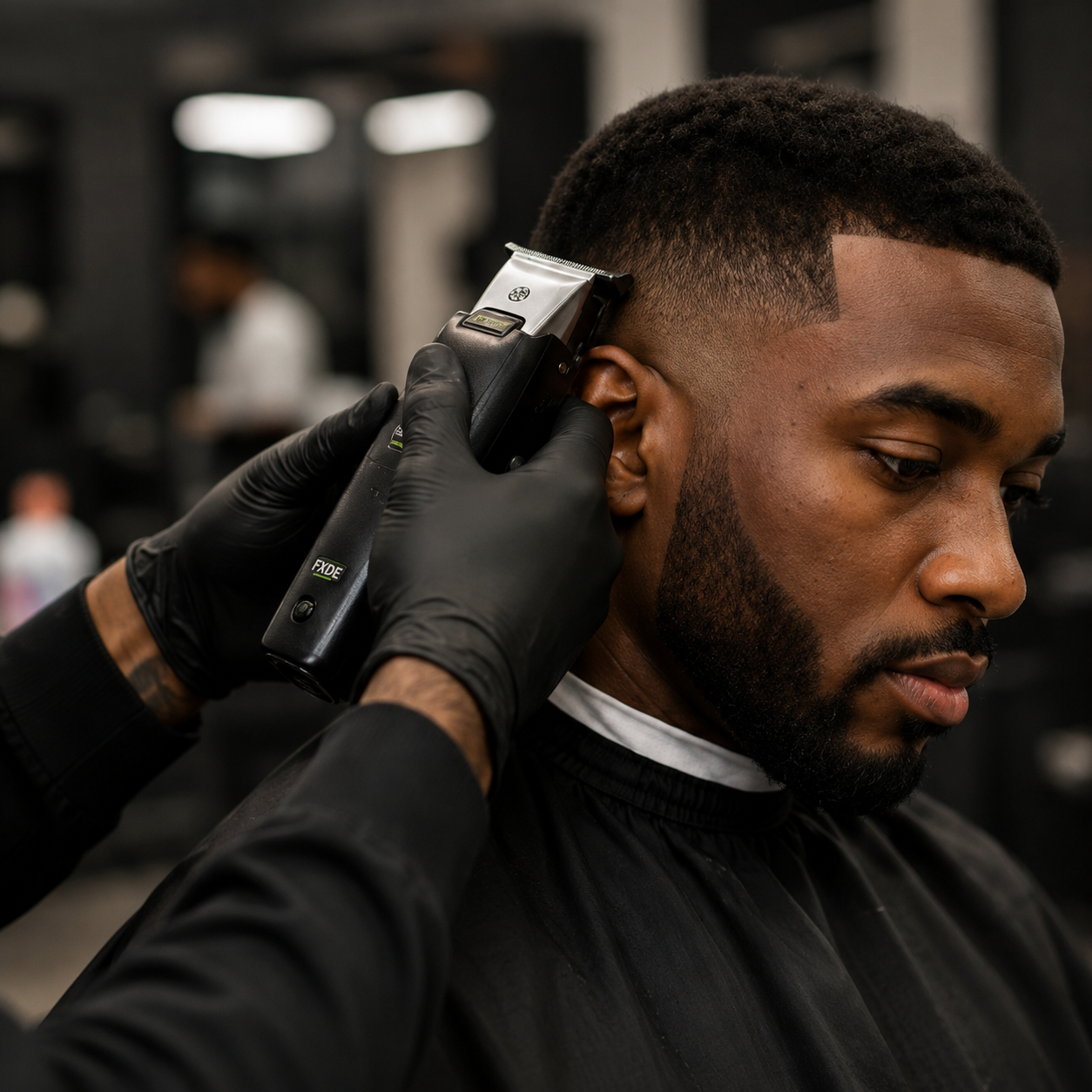

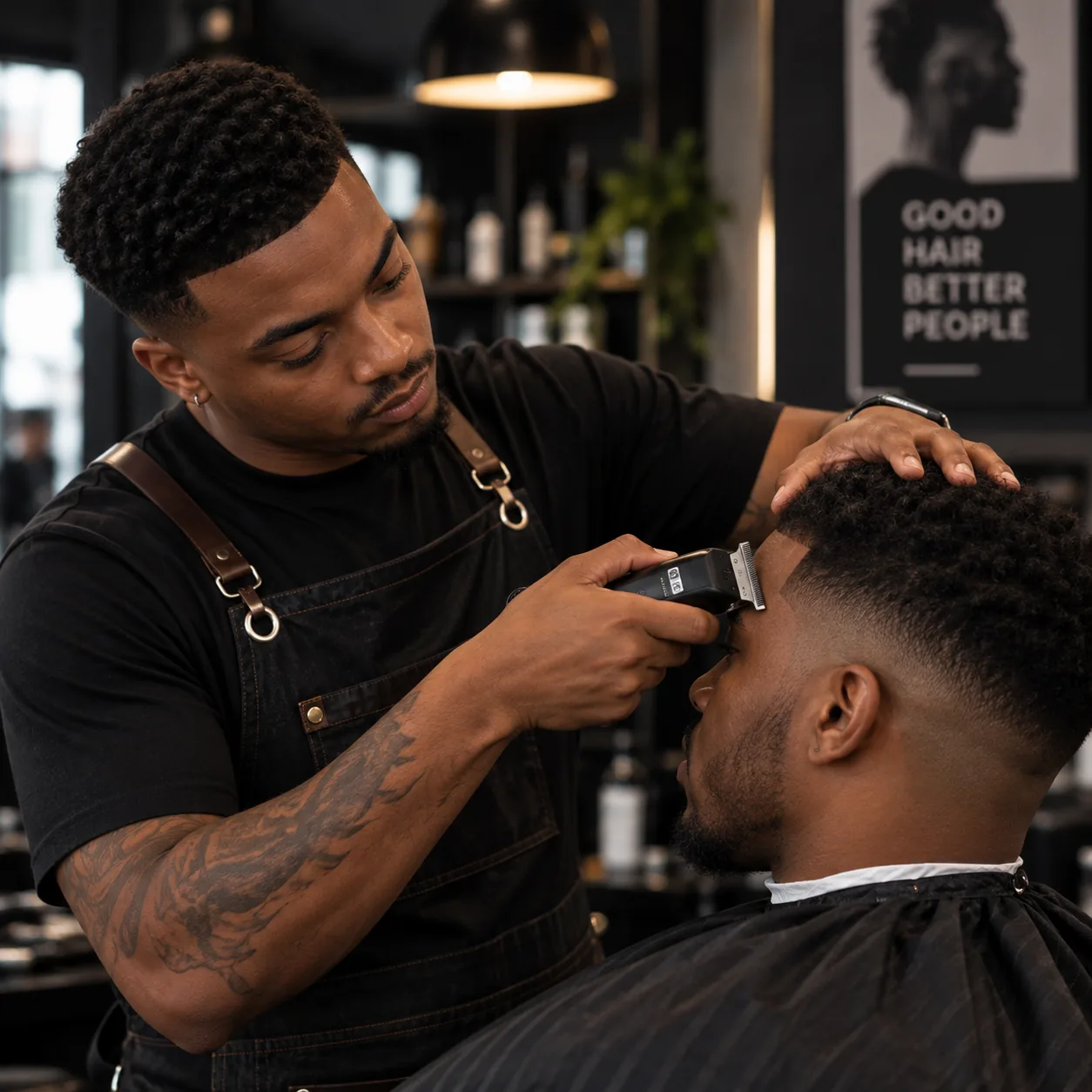
December is when most barbershops see their highest client numbers, which means more cut-and-clean cycles per day than in any other month. It is also when shortcuts creep in. A clean routine takes a few minutes between clients and protects your clients, your shop's standing with the health inspector and your tools.
What South African municipal guidance says
In South Africa, hygiene rules for barbers are set at municipal level, so requirements differ between areas. As one clear example, Garden Route District Municipality publishes training material for barbers and hairdressers with these points (Garden Route District Municipality):
- Instruments used in the salon must be disinfected after each use.
- Anything that touches the client, including blades, shears and combs, should be washed in hot, soapy water to remove film, oil and debris, then placed in 70% alcohol or a barbicide solution.
- Methylated spirits is not an effective cleaning solution, and using it instead of proper alcohol or barbicide is not recommended.
- Each client gets their own clean towel, cut hair goes straight into a covered bin, and the cape and chair are cleaned before the next person sits down.
- In that district, nobody may operate as a barber without a health certificate issued by an Environmental Health Practitioner.
Other municipalities have their own by-laws, and many also require trading or business permits (Hair News). Ask your local Environmental Health Practitioner what applies to your shop.
Why it matters: what unclean tools can spread
The same training lists infections linked to poor hygiene, including folliculitis (barber's itch), tinea capitis (a fungal infection of the scalp), impetigo, lice and hepatitis B, which can spread when a razor blade with blood on it is not sterilised before the next client. None of this is a reason to be nervous. It is a reason to make the routine automatic.
A between-clients routine for clippers
Always follow your clipper maker's care instructions first. The steps below follow the Garden Route guidance and common practice.
- Switch the clipper off and brush the cut hair out of the blade and guard.
- Remove the detachable blade and any guards. Never dip the clipper body or the charger in liquid.
- Wash guards and combs in hot, soapy water to remove oil and debris, then rinse.
- Disinfect them in 70% alcohol or a barbicide solution, following the contact time on the label.
- Dry everything completely, and put a drop of oil on the blade before it goes back on (see our clipper maintenance guide).
- Wipe the clipper handle with a disinfectant wipe, then refit the blade and guard.
Be honest about the trade-offs. Repeated soaking can dry out metal blades and encourage rust if they are not dried and oiled properly, and disinfecting does nothing for a dull or misaligned blade.
Making it work during the December rush
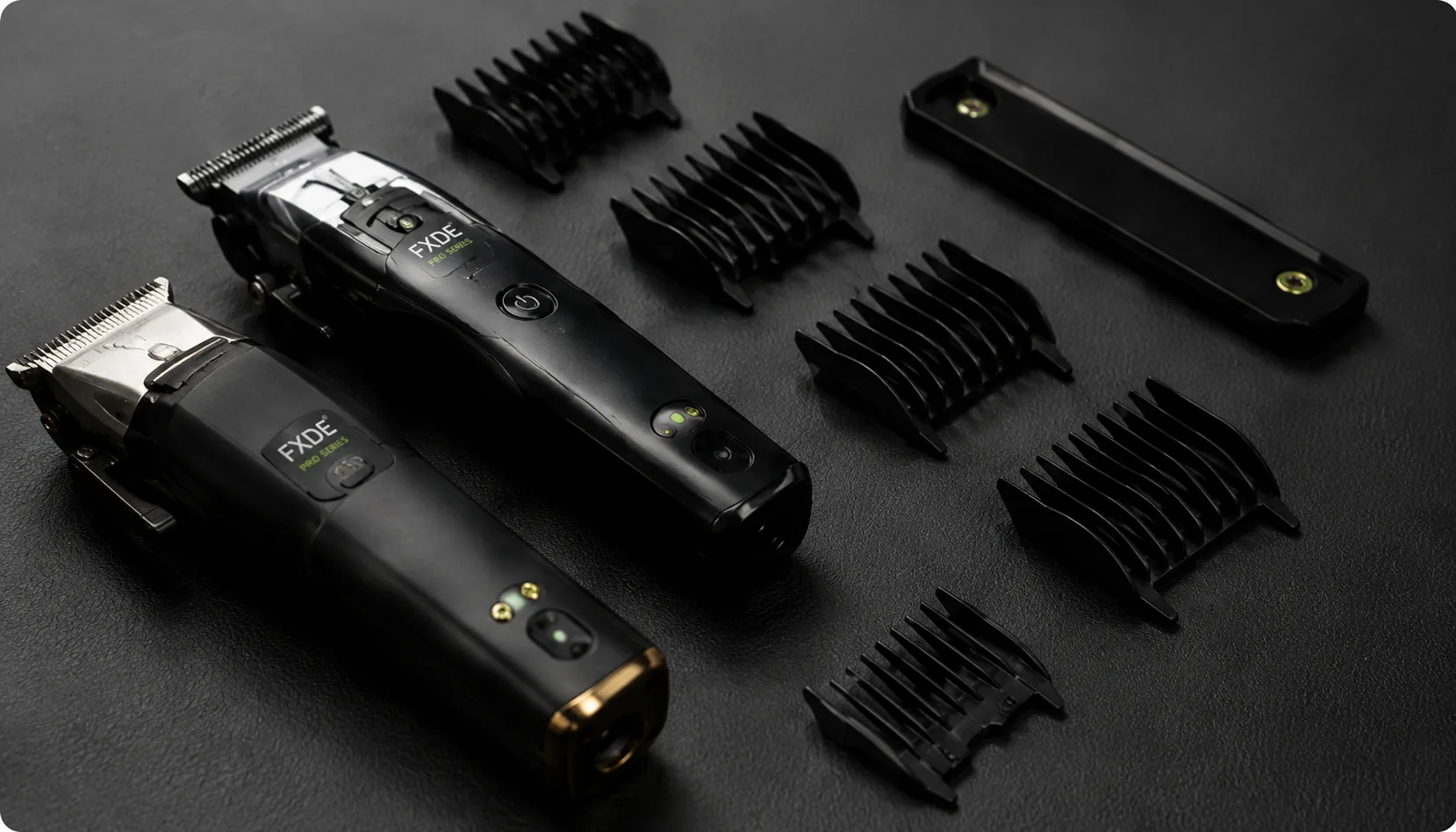
The practical fix for a busy day is a second set of guards and blades, so one set can dry while the other is in use. Our December rush checklist shows how to plan the rest of the day around a full book.
Where FXDE fits in
If you cut back-to-back, our guard sizes guide explains which sizes you will actually need, and the FXDE Clipper Guard and Master Fade Detachable Blade are in the shop. A tidy routine matters more than any product, so if your current setup works, keep it.