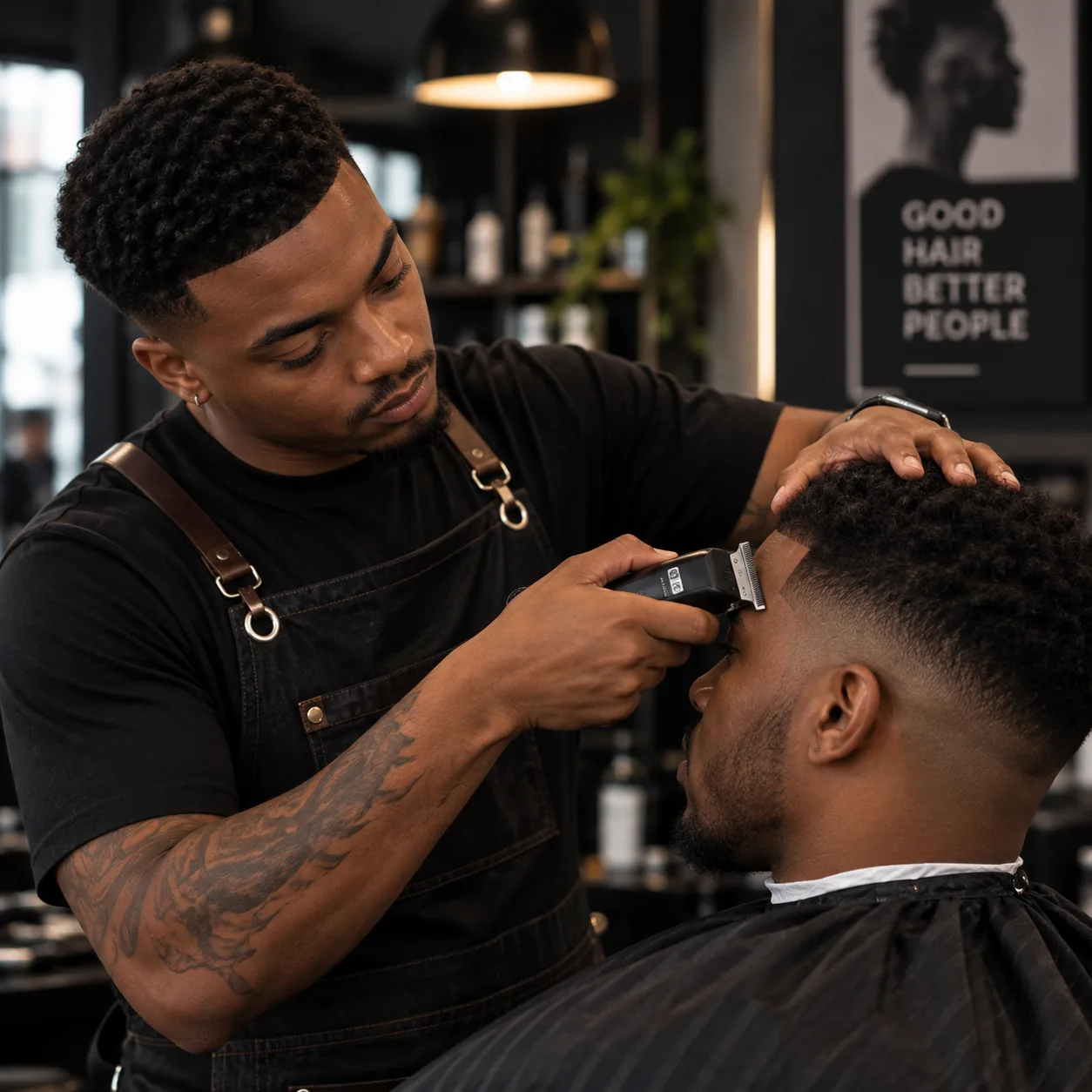
To open a barbershop in South Africa you need: a registered business entity (CIPC, from R175), a health compliance certificate from your local municipality, liability insurance, and a functional workstation — typically two barber chairs minimum to be commercially viable. Equipment is usually the second-largest startup cost after your lease. Budget between R15,000 and R40,000 for a one- to two-chair setup with professional-grade tools, depending on whether you buy new or second-hand chairs and how much of the fit-out you do yourself.
Why most barbershop startup guides are not written for South Africa
The majority of "how to open a barbershop" content is American. The figures are in dollars, the licensing references are state-board specific, and the equipment recommendations are brands that either do not distribute in South Africa or cost significantly more once import duties and shipping are factored in. South African barbers opening their first shop face a different set of considerations: municipal health compliance rather than state board exams, a rand-denominated equipment budget, and a market that expects specific service types — especially skin fades and precise line work — as the baseline, not the premium offering.
This guide is written for that reality.
The legal steps first: do not skip these
Register your business
You can operate as a sole proprietor without registering, but a registered entity (Pty Ltd or Close Corporation) protects your personal assets and is required if you want a business bank account, which you will need to accept card payments. CIPC registration costs from R175 and can be done online at cipc.co.za. Allow two to four weeks for processing.
Health compliance certificate
All premises offering hair services in South Africa require a certificate of acceptability from the local municipality''s environmental health department. The inspector will assess your ventilation, sanitation facilities, waste disposal, and general hygiene practices. Requirements vary slightly by municipality but the core standards are set under the Businesses Act and the National Health Act. Book the inspection before you open — operating without the certificate exposes you to closure.
Zoning
Your premises must be zoned for business use. Residential properties are not automatically permitted to operate commercial services. Confirm zoning with your municipality before signing a lease.
The workstation: what you genuinely need on day one
Barber chairs
This is usually the single largest equipment cost. Professional-grade hydraulic barber chairs in South Africa typically cost between R4,000 and R12,000 new, depending on features and supplier. Second-hand chairs in good condition can be found for significantly less. One chair is the minimum to operate; two allows you to have an apprentice or second barber working alongside you, which significantly changes the revenue ceiling of the business.
Your mirror and workstation surface
Clients spend an entire service looking at their reflection. A clear, well-lit mirror is not a luxury. Wall-mounted mirrors are the most space-efficient option. The FXDE Tri-Fold Mirror (R499.99) is a practical option for barbers who want a freestanding setup or who are operating from a rented station rather than their own space.
Flooring and mat
Hair accumulates continuously. Textured or porous flooring becomes a hygiene liability quickly. The practical solution is an anti-fatigue rubber mat at your workstation, which reduces the physical toll of standing for eight or more hours a day and is easier to clean than the floor beneath it. The FXDE Rubber Mat (R309.99) is purpose-built for barber workstations — non-slip, easy to sanitise, and durable under daily use.
The cutting tools: prioritise quality over quantity
New barbers often try to buy every tool at once. The professional approach is to buy fewer tools at a higher quality and add as your volume grows. Here is the hierarchy:
Primary clipper — your main revenue tool
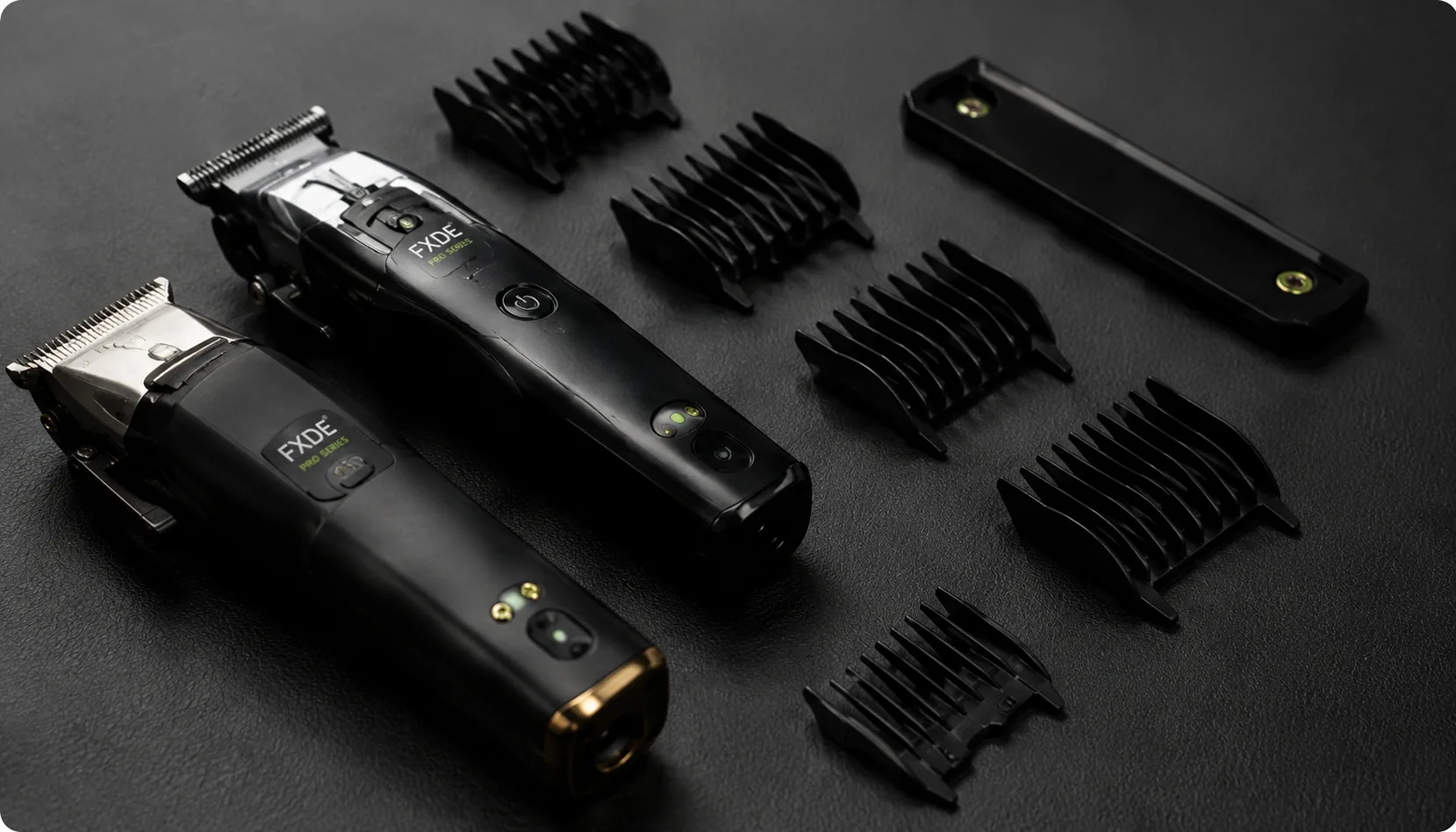
This is the tool that does the majority of every service. It needs to run reliably through a full day of cuts without heat, blade drag, or battery failure becoming a problem. The FXDE Cordless Master Fade Clipper Pro Series (R1,999.99) is designed specifically for the fade-heavy service menu that South African clients expect — a rotary motor, a zero-gap adjustable blade, and cordless runtime built around professional workloads rather than occasional home use.
Trimmer — for lines and detail work
The quality of a haircut''s finish is almost entirely determined by your trimmer. A dull or imprecise trimmer makes a good cut look unfinished. The FXDE Cordless T-Outline Trimmer Pro Series (R1,499.99) handles hairline definition, beard lining, and detail work with a zero-gap T-blade that performs consistently across hair types.
Cape
A professional cape is a hygiene requirement, not an optional extra. Hair cuttings that fall on a client''s clothing are an immediate customer experience failure. The FXDE Lime Cape and FXDE Navy Cape (R249.99 each) are professional-grade cutting capes with secure neck fastenings — practical, easy to wash, and visually consistent with a professional setup.
Barber bag for mobile or multi-station barbers
If you are renting a chair rather than running your own shop, or if you do home visits, tool organisation and protection matters more than most barbers expect. The FXDE Barber Bag (R279.99) keeps tools secure and organised between locations and protects blades from the kind of contact damage that costs more to repair than the bag does to buy.
The consumables budget: ongoing costs most guides ignore
Equipment is a once-off cost. Consumables are not. Budget monthly for:
- Blade oil and cleaning spray (hygiene regulations require cleaning and oiling after every client)
- Disinfectant for combs, scissors, and surfaces
- Disposable neck strips (required for each client)
- Replacement blades on a usage-based schedule
Most experienced barbers budget roughly R500 to R800 per month for consumables in a one-chair shop. This figure rises proportionally with volume.
What can wait until you have revenue
You do not need every tool on day one. A shampoo basin, a reception desk, branded merchandise, and premium lighting are all things that improve the client experience and justify higher service pricing — but they are not required to open and generate income. Start with a functional, hygienic, professional workstation, build your client base, and invest revenue back into the space progressively.