
The result is a very close, smooth shave with less risk of nicks and irritation than a razor.
How a foil shaver works
- The foil sits flat against the skin
- Hairs push up through the tiny holes in the foil
- Blades moving rapidly side to side underneath cut each hair at the surface
Because the foil acts as a shield between skin and blade, foil shavers are popular for sensitive skin and for clients prone to razor bumps.
Foil shaver vs rotary shaver
- Cutting action: a foil shaver's blades move side to side under a straight foil; a rotary shaver's circular blades spin under round heads
- Best on: foil shavers suit flat areas like the scalp, cheeks and neck; rotary shavers suit contours like the jawline
- Finish: foil shavers give a very close, uniform finish; rotary shavers are close and more flexible around curves
- In barbering: foil shavers are the standard for finishing bald fades and head shaves; rotary shavers are less common in shops
Why barbers use foil shavers
- Bald fades. A foil shaver takes the bottom of a fade down to skin level in seconds.
- Head shaves. It gives a smooth, even finish across the whole scalp.
- Comfort. Clients with sensitive skin get a close result with fewer bumps than a blade.
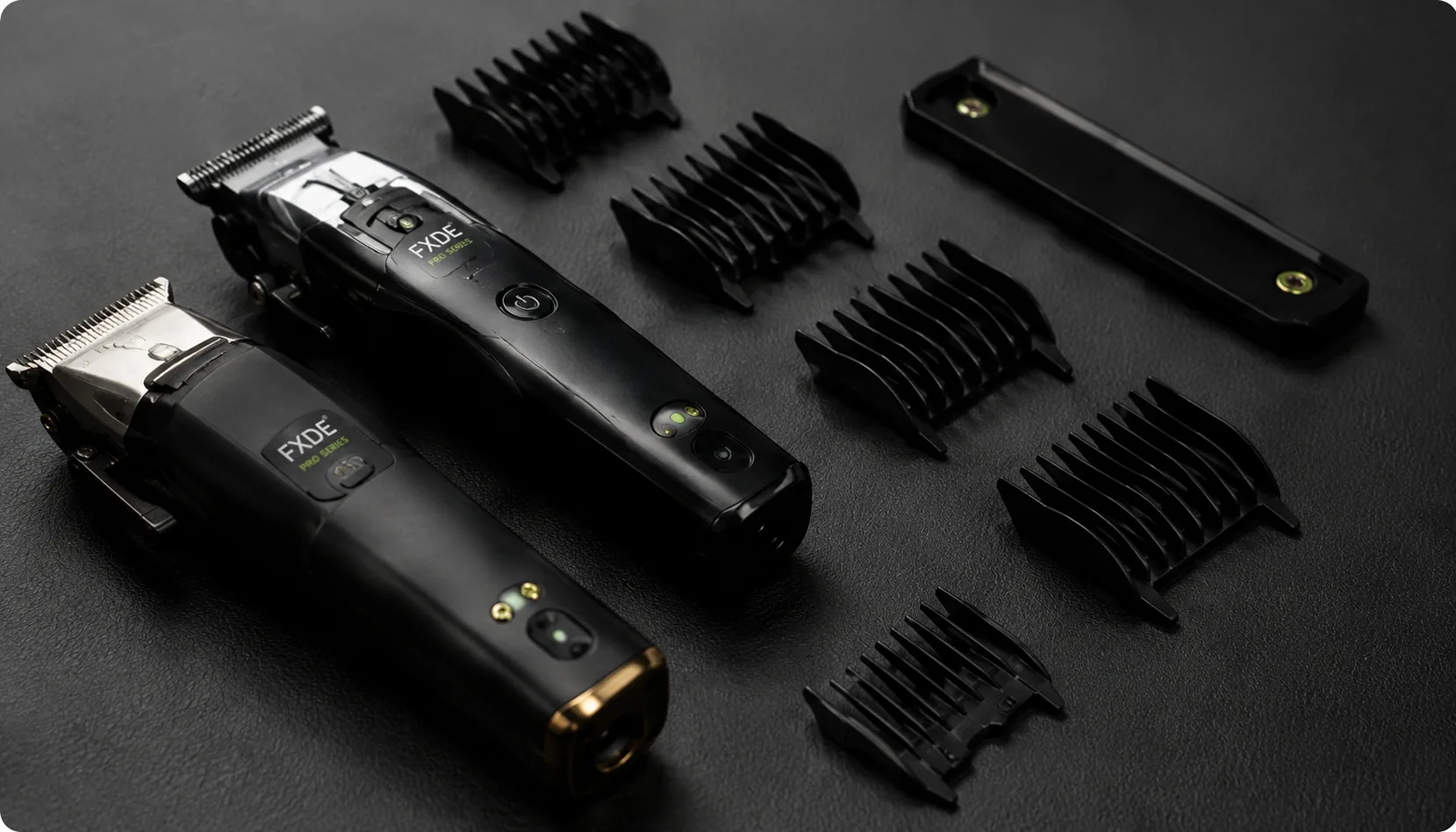
A triple-foil shaver, like the FXDE Triple Foil Shave (R1,499.99), uses three foils side by side to cover more skin per pass. See what barbers look for in a professional shaver.
Looking after a foil shaver
- Brush out the head after each use and disinfect between clients
- Never press hard: pressing bends the foil and causes irritation
- Replace the foil when it starts pulling or leaving stubble. FXDE Tri-Foil replacement blades are R249.99